


Why the Roaming AI Photo Booth Is the Move for Holiday Events with a Big Guest List
September 18, 2026
When you’re planning a holiday party for hundreds of guests, the challenge is not finding entertainment. It is finding entertainment people can actually access. A roaming AI photo booth solves that problem by bringing the experience directly into the crowd.
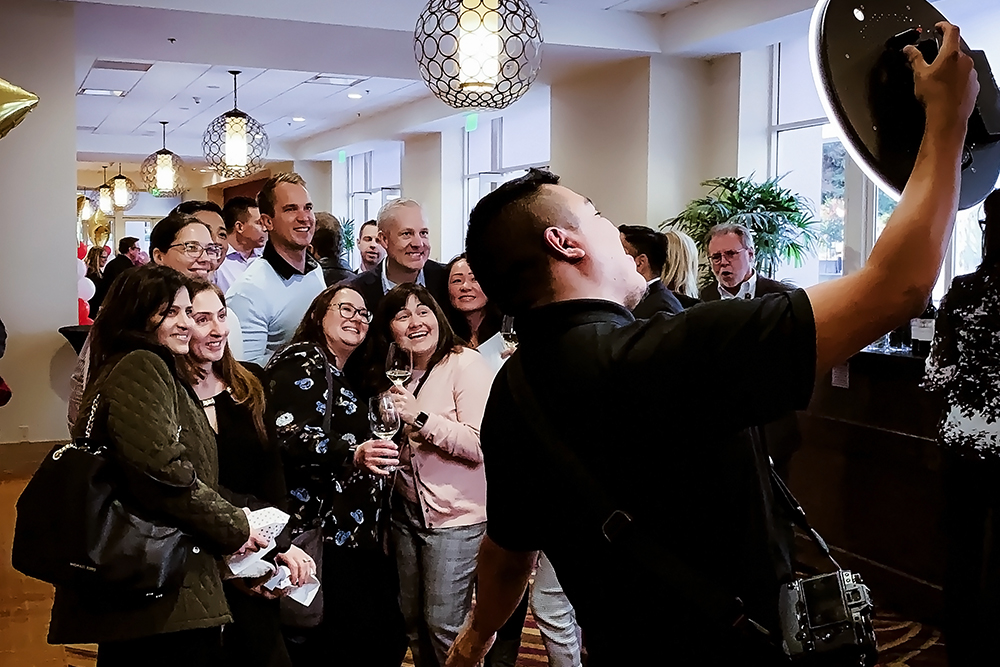
Instead of asking guests to leave conversations, find a booth, and wait in line, a photographer moves through the event and captures people where they already are. AI then transforms those photos into customized digital images that can reflect your holiday theme, company branding, or creative concept.
For a large guest list, that combination of mobility, personalization, and digital delivery makes the format worth considering.
Why a Roaming AI Photo Booth Works for Large Events
A roaming AI photo booth works particularly well at large holiday events because it removes the fixed location that normally controls photo booth participation. The experience moves through the venue rather than asking your guests to move toward it.
That distinction is important when you have hundreds of people spread across cocktail areas, dining tables, bars, lounges, entertainment spaces, and networking areas.
With a conventional stationary booth, participation depends on guests noticing the booth and deciding that taking a photo is worth leaving whatever they are doing. If the booth becomes popular, you may also create a queue.
A roaming format changes the flow. The photographer can approach groups naturally, capture the image, and continue through the room.
The AI component adds another layer. Instead of receiving only a conventional event photo, your guests can receive transformed portraits built around an event concept, visual theme, or brand identity. Current AI photo experiences for corporate events can combine roaming capture with customized AI styles and digital delivery.
For a large holiday event, this means the photography becomes part of the event rather than a separate destination inside it.
The Biggest Advantage Is Better Guest Flow
Guest flow becomes increasingly important as your attendee count grows. A fixed activation can work brilliantly, but every fixed activation also creates a point where people stop, gather, and potentially queue.
A roaming setup distributes that activity throughout the venue.
Imagine a 500-person holiday event. Some guests are eating. Others are talking near the bar. Another group is watching the entertainment. Asking everyone to visit one photo booth means competing with everything else happening in the room.
With roaming photography, you can capture each of those groups without pulling them away from the event.
This is also why roaming formats fit naturally with current corporate holiday activation trends. The experience can become part of the event rather than requiring guests to interrupt the party to participate.
That does not mean a roaming booth completely replaces every stationary activation. If you want an elaborate physical backdrop, controlled studio lighting, or a dedicated print experience, a fixed station may still be the better choice.
The difference comes down to your objective. If accessibility and coverage across a large crowd matter most, roaming has a clear practical advantage.
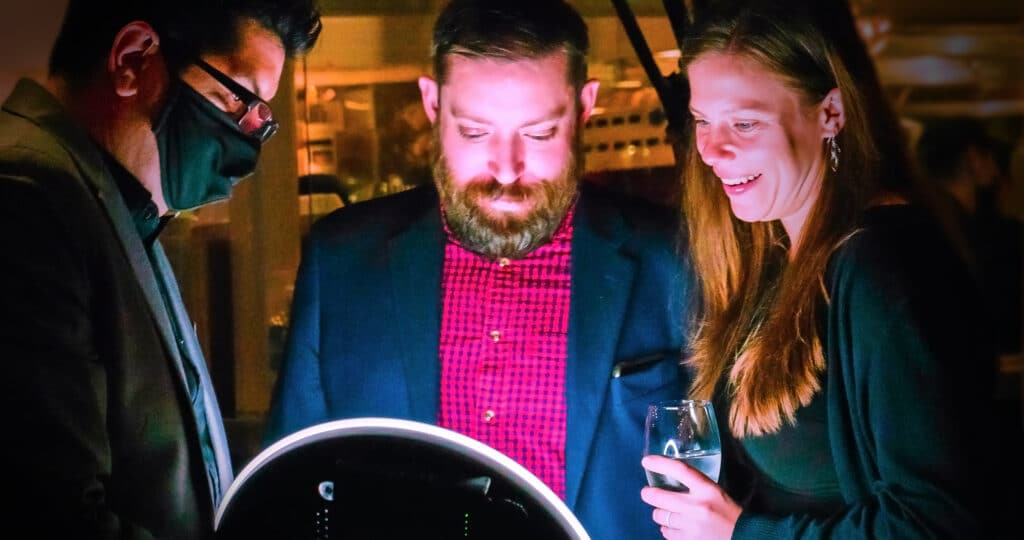
AI Gives Each Guest More Than a Standard Event Photo
AI can turn a simple portrait into an experience your guests help create.
Instead of photographing someone against the same physical backdrop used by every other guest, you can build a visual concept around the event. A guest might appear inside a stylized winter scene, a branded fictional world, a retro holiday campaign, or another custom environment.
That flexibility matters for corporate events because branding does not have to stop at placing a logo in the corner.
Your colors, visual style, campaign elements, company references, event theme, and other creative details can influence the final image. The goal is to create something that still feels personal to the guest while remaining recognizably connected to your event.
The same principle matters when using AI to increase event participation. Technology alone rarely gives someone a compelling reason to take part. The appeal comes from seeing what the experience creates specifically for them.
For an AI photo booth corporate event experience, start with the finished image you want guests to receive. Then work backward into the technology needed to create it.
You Can Bring the Experience to More of Your Guest List
Large events create a simple mathematical problem. You have a limited number of event hours and a large number of people who might want to participate.
A roaming setup gives you more flexibility because photographers can actively seek out guests rather than waiting for guests to arrive.
You can also scale the setup according to attendance. For a larger event, multiple roaming units can work different areas of the venue instead of relying on one photographer to cover the entire room.
This is particularly useful when your event has several distinct spaces. One roamer could work a cocktail reception while another covers a dining or lounge area.
The important question is not simply how many people are invited. Ask how many guests you realistically want to photograph and during which part of the event.
If participation needs to happen within a short cocktail hour, you may need more capacity than an event where roaming photography runs throughout the evening.
A Small Physical Footprint Gives You More Venue Flexibility
Holiday events already consume floor space quickly. Tables, staging, bars, catering, entertainment, décor, sponsor areas, and AV equipment all compete for the same room.
A digital roaming experience can operate without dedicating a large section of the venue to a conventional booth.
That makes it useful when your available footprint is limited or when you would rather use premium floor space for guests.
For Bay Area events in places such as San Francisco, San Jose, Mountain View, Palo Alto, Santa Clara, Walnut Creek, and Burlingame, venue layouts can vary significantly. Your photo experience needs to fit the room you actually booked, not the one that looked convenient in a supplier brochure.
If you want printing, you may still need a stationary print area. If you stay digital, the physical requirements can remain much lighter.
That flexibility is worth considering when planning corporate holiday events and brand activations where several suppliers may already be competing for power, setup time, and space.
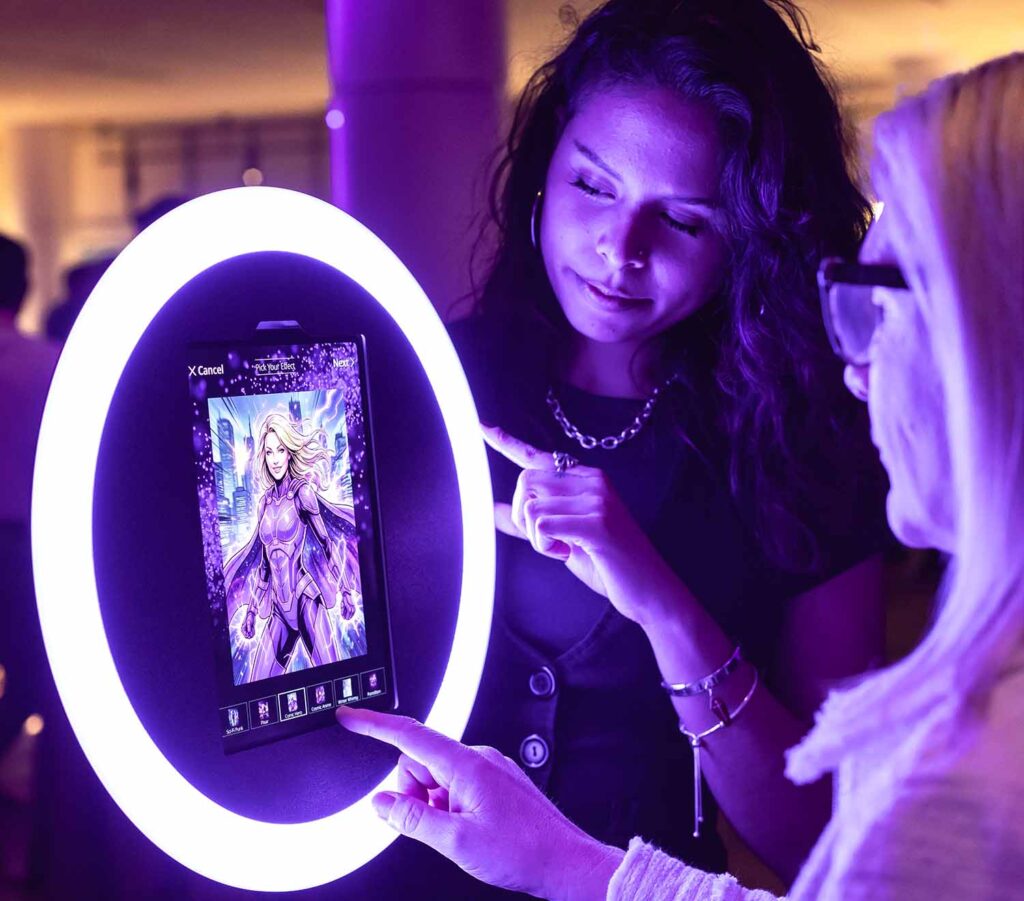
Instant Digital Sharing Extends the Experience Beyond the Photo
A roaming AI experience works best when guests can receive their finished content quickly.
Digital delivery removes another potential bottleneck. Guests do not necessarily need to return to a booth or wait around for a physical item before continuing with the event.
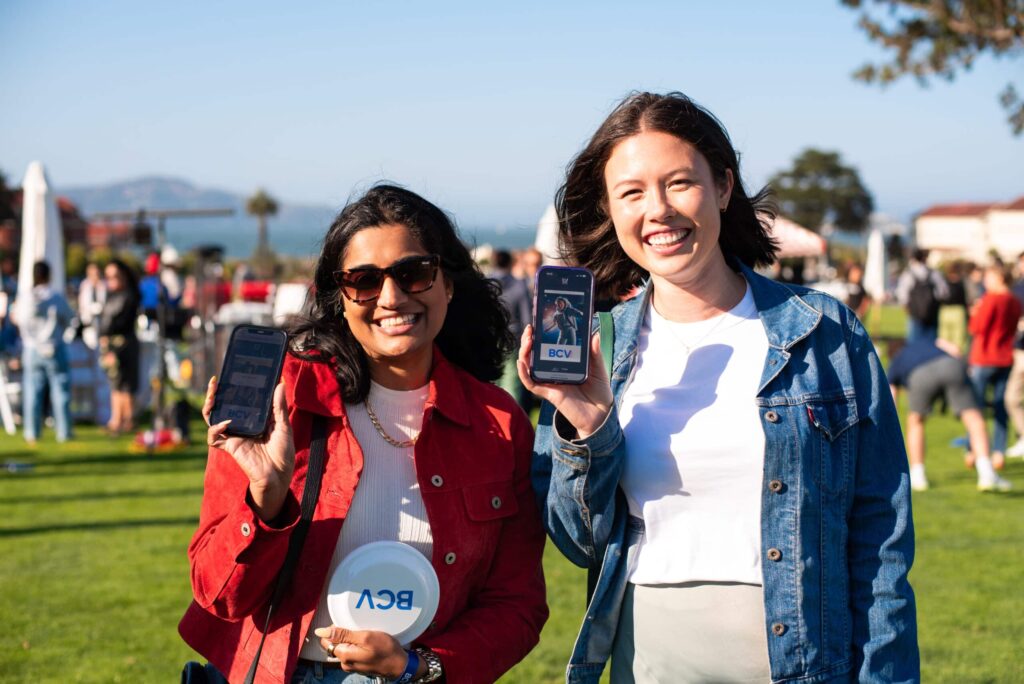
Once they receive the finished image, they can save it to their phone or share it.
For corporate events, this also changes how you should think about the finished content. The image is not simply documentation of the evening. It can become a branded digital asset created specifically for the person appearing in it.
If social sharing matters to you, prioritize the output itself. A giant logo does not automatically make an image more useful to your brand. Give guests something they genuinely want to keep, then integrate the branding naturally into the creative direction.
How to Choose the Right Creative Concept
The strongest AI concept starts with your event rather than with the technology.
Your holiday event photo booth ideas should reflect who is attending, what kind of event you are producing, and how playful or polished the brand can reasonably become.
A technology company might build a futuristic winter world. A fashion or luxury event may want editorial-style holiday portraits. A company with a recognizable mascot could incorporate that character into the transformation. Another event might use an understated branded environment rather than an obviously festive theme.
Before approving the concept, ask yourself three questions:
- Would your guests actually want this image?
- Does the creative direction fit your company and event?
- Would the finished image still look good without an oversized logo?
If the answer to all three is yes, you probably have a stronger concept than one built around AI novelty alone.
What Does a Roaming AI Booth Cost?
There is no reliable universal price for a roaming AI booth because the scope can vary considerably. AI customization, staffing, event duration, guest count, number of roamers, creative development, printing, and logistics can all affect the quote.
Published California pricing gives you some context. One roaming photo booth provider advertises $300 per hour with a two-hour minimum, while another lists a two-hour roaming photography package at $399.99. More comprehensive corporate photo booth packages with staffing and branded elements can start around $1,400 for three hours. These are general market benchmarks, not Bay Area AI-roaming quotes or Pop Life pricing.
AI experiences often require additional creative and technical work, so comparing them with a basic digital roaming booth solely on headline price can be misleading.
When requesting quotes, give each provider the same information:
- Event date and location
- Expected attendance
- Active service time
- Number of rooms or event areas
- Desired AI concept
- Branding requirements
- Digital or printed delivery
- Number of roaming photographers required
- Any venue access or connectivity requirements
That gives you a much more useful comparison than asking, “How much is a photo booth?”
How Many Roamers Do You Need for a Big Guest List?
The right number depends on how many guests you want to reach, how long the activation runs, and how your event is laid out.
A single roaming photographer may suit an event where photography runs for several hours and guests remain relatively concentrated. A much larger party spread across multiple floors or spaces may benefit from several roamers.
Think about peak demand rather than total attendance alone.
A 600-person party running for five hours creates a different challenge from a 600-person reception where most participation needs to happen within 90 minutes.
You should also decide whether your goal is broad event coverage or individual participation. Photographing groups throughout the evening requires different capacity from trying to give every attendee a personalized AI image.
Ask providers how they would configure the experience around your actual guest count and schedule rather than simply adding another unit because the attendance number looks large.
When a Roaming AI Booth May Not Be the Right Choice
A roaming AI booth is useful for large, fluid events, but it is not automatically the best option for every holiday celebration.
If you are hosting a smaller event where guests have plenty of time to visit one location, a stationary booth may be simpler and less expensive.
A fixed setup may also make more sense if you want highly controlled lighting, a physical scenic installation, elaborate props, or immediate printing built into the main experience.
You may not need AI at all if your guests simply want attractive photographs together. Adding technology does not automatically improve an experience.
Choose roaming AI because mobility, personalization, or creative transformation solves a real event need. Otherwise, a simpler format may do the job perfectly well.
Common Mistakes to Avoid
Most problems come from mismatching the activation to the event rather than choosing the wrong piece of technology.
- Underestimating guest volume: One roaming photographer may struggle to cover a large crowd during a short activation window, so discuss expected participation and peak periods before booking
- Treating AI as the concept: A generic transformation can lose its novelty quickly, so build the creative direction around your event, audience, or brand
- Overbranding the output: Guests are less likely to value an image that feels like an advertisement, so make the person the focus and integrate branding into the design
- Ignoring venue connectivity: AI processing and digital delivery can depend on reliable internet access, so confirm technical requirements with your provider and venue before the event
- Assuming roaming means zero logistics: Photographers still need operating plans, access, charging or equipment support, and clear event coverage priorities, so include them in your production schedule
- Comparing quotes by price alone: A basic roaming booth and a customized AI activation may include very different levels of creative development, staffing, branding, and delivery, so compare the complete scope
Frequently Asked Questions
Is a Roaming AI Booth Good for Large Corporate Holiday Events?
Yes, particularly when guests are spread across a large venue or you want to reduce reliance on a single photo booth queue. Because the photographer moves through the crowd, the experience can reach guests during conversations, receptions, dinners, and other parts of the event.
Can an AI Photo Booth Match Our Company Branding?
AI photo experiences can incorporate brand elements such as colors, graphic treatments, event themes, custom visual styles, branded overlays, and campaign concepts. The strongest designs keep the guest at the center of the image while using your brand to shape the creative environment around them.
Can Guests Receive Their AI Photos at the Event?
Digital AI photo experiences can deliver finished images to guests during the event through methods such as text or email. The exact delivery process depends on the provider and setup. If fast sharing matters, ask how images are processed and delivered before you book.
Do Roaming AI Booths Need a Dedicated Space?
A digital roaming setup can require far less dedicated floor space than a conventional stationary booth because the photographer moves through the venue. Additional space may still be required if you add printing stations, equipment areas, displays, or other physical components to the activation.
Is a Roaming Booth Better Than a Stationary Photo Booth?
Neither format is universally better. Roaming works well when mobility, broad guest coverage, and limited floor space matter. A stationary booth may be better when you want controlled lighting, a detailed backdrop, a defined activation area, or a traditional print-focused experience.
How Early Should You Book a Roaming AI Booth for a Holiday Event?
Book early enough to allow time for creative development, branding approvals, venue coordination, technical planning, and testing. More customized concepts generally require more preparation than basic photo booth rentals, particularly if you need original AI styles or several roaming units for a large event.
Bring the Experience Into the Crowd
Choose an experience that fits your guest count, event flow, venue, and creative objective instead of forcing hundreds of people toward one activation point.
At Pop Life Photo, we create customized photo and video experiences for corporate events and celebrations across the Bay Area. Our roaming AI photo booth combines mobile guest interaction with customized AI concepts, digital delivery, brand integration, and scalable options for larger events.
We build each experience around the event rather than handing you a generic setup. That means considering your creative direction, guest volume, branding, technology, venue requirements, and the quality of the finished content your guests receive.
Planning a holiday event with a big guest list? Bring the photo booth to your guests with a Roaming AI Photo Booth built for high-energy, high-volume events.