


What Is an Experiential Marketing Activation? A Bay Area Corporate Planner’s Guide
October 19, 2026
An experiential marketing activation is an interactive brand experience that invites your audience to participate rather than simply observe. For corporate event planners, marketing managers, and brand experience teams, experiential marketing activations can turn conferences, product launches, and company celebrations into opportunities for direct engagement.
Options for corporate event photo activations include AI photo experiences, branded video booths, roaming photography, and professional headshots. Understanding how these formats work, what affects their cost, and which suits your objectives helps you plan an activation that delivers value.
What Are Experiential Marketing Activations?
Experiential marketing activations are interactive experiences that connect audiences with a brand through participation. Instead of relying solely on advertisements or presentations, you invite attendees to create, explore, or share something connected to your brand.
A branded photo experience for events is one example. Guests might generate AI-enhanced portraits, record short videos, or receive professional headshots with branded graphics.
Start with a clear objective. You might want to attract visitors to a conference booth, encourage product conversations, create campaign content, or improve employee engagement. Your chosen format should support that goal.
Which Types of Experiential Marketing Activations Work Best?
Understanding corporate event photo activation trends can help planners evaluate new formats, from AI-generated imagery to cinematic video experiences, and choose options that suit their audience and campaign objectives.
The right format depends on your audience, event, budget, and desired outcome. Consider these options before committing to a particular technology.
AI Photo Experiences
AI photo experiences turn attendee portraits into personalized, branded digital creations. For marketing teams, they offer a creative way to bring campaign concepts to life, encourage participation, and give guests content they can share beyond the event.
They work particularly well at technology conferences, product launches, and trade shows where innovation and audience engagement matter.
To make the experience effective, align the visual concept with your campaign, establish your branding requirements, and plan how guests receive their images.
GlamBot X Experiences
GlamBot X captures cinematic, slow-motion video that gives attendees a premium, red-carpet-style experience. For brand and event teams, it creates an opportunity to showcase products, reinforce a high-end brand identity, and produce striking video content that guests can share.
GlamBot X suits product launches, corporate celebrations, and premium brand activations where presentation and visual impact are central to the experience.
Roaming Photo Booths
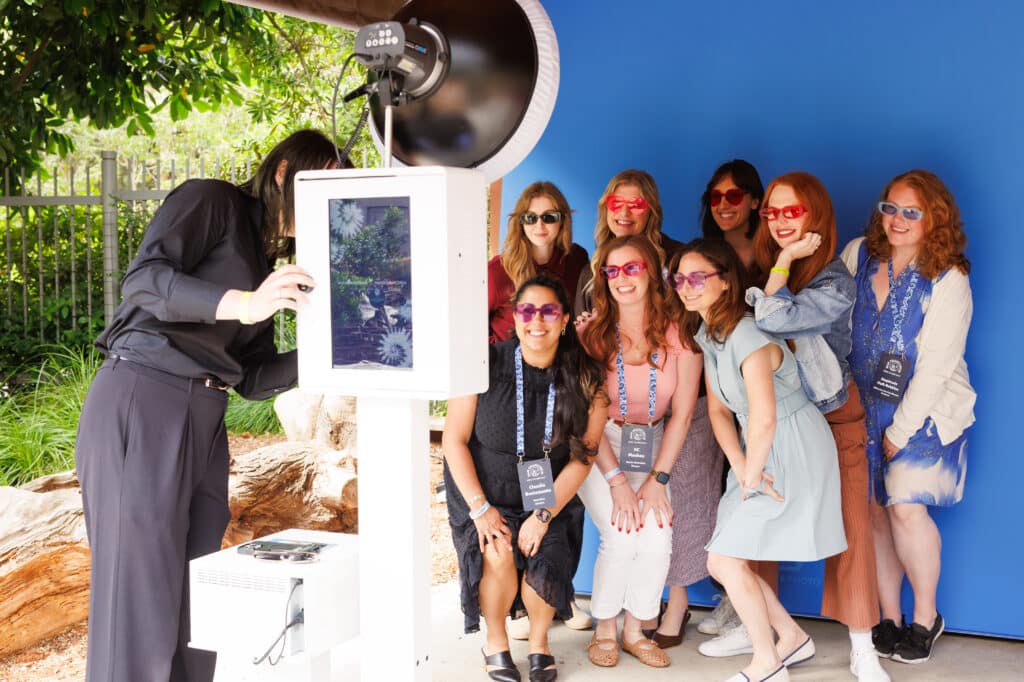
Roaming photo booths bring the experience directly to attendees, making it easier to engage guests as they move around the venue.
For corporate event teams, this creates more opportunities for participation without relying on a single fixed location. It works particularly well at networking receptions, large conferences, and multi-area events.
Consider a roaming photo booth experience when you want to encourage interaction across the venue while creating branded content for attendees to keep and share.
Branded Photo Booths
Branded photo booths integrate your visual identity into the guest experience through customized digital templates, prints, and other agreed branding elements.
They help marketing teams extend campaign visibility beyond the event while giving attendees a personalized takeaway.
This format suits trade shows, sponsorship activations, and corporate celebrations where consistent branding and shareable content support wider marketing goals. Explore branded photo booth experiences to create an activation tailored to your campaign.
Professional Headshots
Professional headshot experiences give attendees a practical benefit while creating a natural opportunity to engage with your brand.
For corporate teams, they can add value to recruitment events, industry conferences, and employee engagement programs by providing portraits that attendees can use on LinkedIn and other professional platforms.
Choose this format when you want to offer a useful, lasting takeaway that supports professional networking rather than focusing solely on entertainment.
How Do Experiential Marketing Activations Work?
A successful activation follows a planned process, from the initial brief to content delivery and performance measurement.
- Define your objective. Decide whether you want to encourage participation, generate qualified leads, support networking, or create branded content.
- Develop the creative concept. Choose an experience that reflects your campaign, audience, and brand identity.
- Plan the venue. Confirm space, power, lighting, accessibility, equipment restrictions, and setup times.
- Deliver the experience. Establish staffing, guest instructions, image delivery, and technical support before the event.
- Measure results. Track relevant indicators such as completed sessions, downloads, voluntary shares, attendee feedback, or qualified leads.
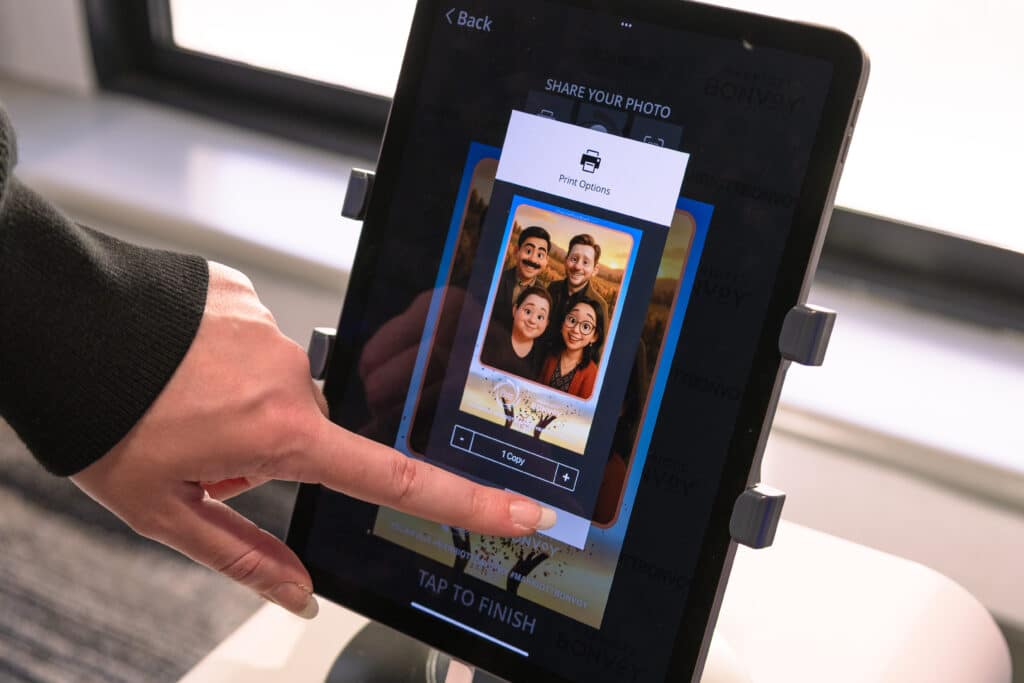
A strong example of this approach was the Salesforce AI trading card activation. By combining AI-generated imagery with a personalized trading card concept, the experience gave attendees a creative way to interact with the Salesforce brand and receive a branded digital keepsake they could share beyond the event.
It demonstrated how a tailored photo activation could turn a simple interaction into a memorable brand experience.
How Do You Choose the Right Activation?
Choose a format that matches your audience, objectives, venue, and available budget. A visually impressive installation is not necessarily the most effective option for your event.
| Objective | Suitable Format | Key Consideration |
| Encourage social sharing | AI photo experience | Creative relevance |
| Create cinematic content | GlamBot-style video | Space and production |
| Reach attendees across a venue | Roaming photo booth | Mobility and staffing |
| Increase brand visibility | Branded photo booth | Branding and delivery |
| Provide a practical benefit | Headshot station | Session speed and image quality |
Consider your audience’s comfort with photography, accessibility needs, and willingness to participate. For a busy conference, a streamlined experience may outperform a complex installation that creates long queues.
How Much Do Experiential Marketing Activations Cost?
The cost depends on the technology, customization, event duration, staffing, venue requirements, and content deliverables. Without a defined brief and provider quote, there is no reliable universal price for a Bay Area activation.
Key pricing factors include:
- Equipment and technology: Different photo and video formats have different production requirements
- Customization: Bespoke AI concepts, branded templates, and overlays may require additional design work
- Event duration: Longer operating hours can affect staffing and equipment costs
- Guest volume: High attendance may require additional stations or operators
- Logistics: Setup, breakdown, travel, and venue access affect the scope
- Content delivery: Printing, editing, and digital galleries may influence the package
Request an itemized quote that confirms operating hours, staffing, setup, branding, deliverables, and any additional fees.
If your budget is limited, a simple branded photo booth or headshot station may offer a better fit than a complex installation. Invest in the experience that serves your objective rather than the one with the longest feature list.
What Should You Consider When Planning a Bay Area Activation?
Your venue, schedule, and audience movement shape the practical requirements of an experiential marketing activation. Consider these factors when planning a Bay Area event:
- Venue logistics: Confirm floor space, power access, loading arrangements, setup windows, and equipment restrictions.
- Location-specific requirements: For events at Moscone Center or in San Francisco’s Financial District, coordinate your installation with exhibitor layouts and attendee traffic.
- Event schedule: Plan for peak participation periods, such as breaks between conference sessions or arrival and networking at receptions.
- Brand preparation: Provide brand guidelines and approved creative assets before production begins.
- Content delivery and privacy: Explain how attendees receive their content, how photographs are handled, and whether images may be used beyond the event, with appropriate consent and privacy measures.
How Do You Measure Activation Success?
Measure performance against your original objective. Attendance alone does not demonstrate commercial impact.
Useful indicators include participation, completed sessions, content downloads, voluntary sharing, attendee feedback, and qualified leads collected with appropriate consent.
Your measurement approach should match the campaign. A recruitment event may prioritize headshot delivery and attendee satisfaction, while a trade show may focus on qualified conversations and leads.
Avoid assuming that high participation automatically translates into sales or stronger brand preference. Evaluate the results against the outcomes you intended to achieve.
Common Mistakes to Avoid
Small planning oversights can undermine an otherwise strong activation. Address these common mistakes before event day.
- Choosing technology before setting a goal: Define the intended outcome before selecting the format
- Underestimating queues: Confirm realistic participant capacity and plan staffing accordingly
- Treating branding as an afterthought: Approve creative assets and templates before production
- Ignoring venue logistics: Confirm space, power, access, and setup requirements in advance
- Overlooking content delivery: Agree on how and when attendees receive their images or videos
- Collecting unnecessary personal data: Gather only what your objective requires and explain its intended use
- Measuring activity instead of outcomes: Track results that relate directly to your campaign goals
Frequently Asked Questions
How Can You Make an Experiential Marketing Activation Feel Authentic to Your Brand?
Build the experience around your brand’s personality, audience, and campaign message rather than adding a logo to a generic activity. Choose visuals, interactions, and takeaways that reflect what your company stands for. When the experience feels relevant to your audience, it becomes a more natural extension of your brand.
How Can You Encourage Reluctant Attendees to Participate?
Make participation easy, explain what guests can expect, and avoid putting pressure on anyone to take part. A visible demonstration, clear instructions, and an approachable event team can help attendees understand the experience. Offering a personalized takeaway also gives guests a practical reason to participate without making the interaction feel like a sales pitch.
What Should You Include in an Experiential Marketing Creative Brief?
Your creative brief should outline the campaign objective, target audience, key message, brand guidelines, desired guest experience, and expected deliverables. Include the event schedule, venue details, technical requirements, approval process, and any privacy considerations. A clear brief gives your production team a shared direction and reduces the risk of conflicting expectations.
How Can You Repurpose Content From an Experiential Marketing Activation?
With appropriate permissions, you can use event content across social media, internal communications, campaign recaps, and future promotional materials. Agree on usage rights, image approvals, and delivery formats before the event. Plan your intended content uses in advance so the activation produces assets that support your wider marketing strategy.
What Makes an Experiential Marketing Activation Inclusive?
An inclusive activation gives attendees different ways to participate without creating unnecessary barriers. Consider wheelchair access, clear instructions, language needs, sensory sensitivities, and alternatives for people who do not want their photographs taken. Review the experience from the attendee’s perspective and make participation voluntary, accessible, and comfortable.
Who Should Be Involved in Approving an Experiential Marketing Activation?
Bring together the people responsible for marketing, event operations, brand approvals, and venue coordination early in the process. Depending on the activation, you may also need input from IT, legal, privacy, or sponsorship teams. Assigning clear responsibilities helps your team approve creative assets, confirm logistics, and resolve issues before production begins.
Bring Your Brand to Life With an Experiential Marketing Activation
Start by defining your audience, campaign objective, and the experience you want attendees to remember.
At Pop Life Photo Booth, we specialize in premium photo and video experiences for corporate events, conferences, and high-end celebrations. We combine creative customization, innovative technology, quality photography and video, and personalized service to develop experiences that reflect your brand and suit your event.
Bring your brand to life with experiential marketing activations tailored to your audience and goals. Partner with Pop Life Photo Booth to create an engaging brand experience for your next Bay Area event.