


How We Built a Custom AI Trading Card Activation for Salesforce at Dreamforce 2026
October 6, 2026
A portrait, a few personal achievements, and a way to say hello. At this Dreamforce activation, attendees brought all three together on their own AI trading card, featuring their likeness, Trailhead community stats pulled from a single badge scan, and a QR code for networking.
Across three days at Moscone West in San Francisco, 2,392 participants took part, with 2,494 completed cards. For teams planning a conference or brand activation, it shows how personal data can turn a keepsake into something guests wear, share, and use to connect.
What Made This Dreamforce Activation Different?
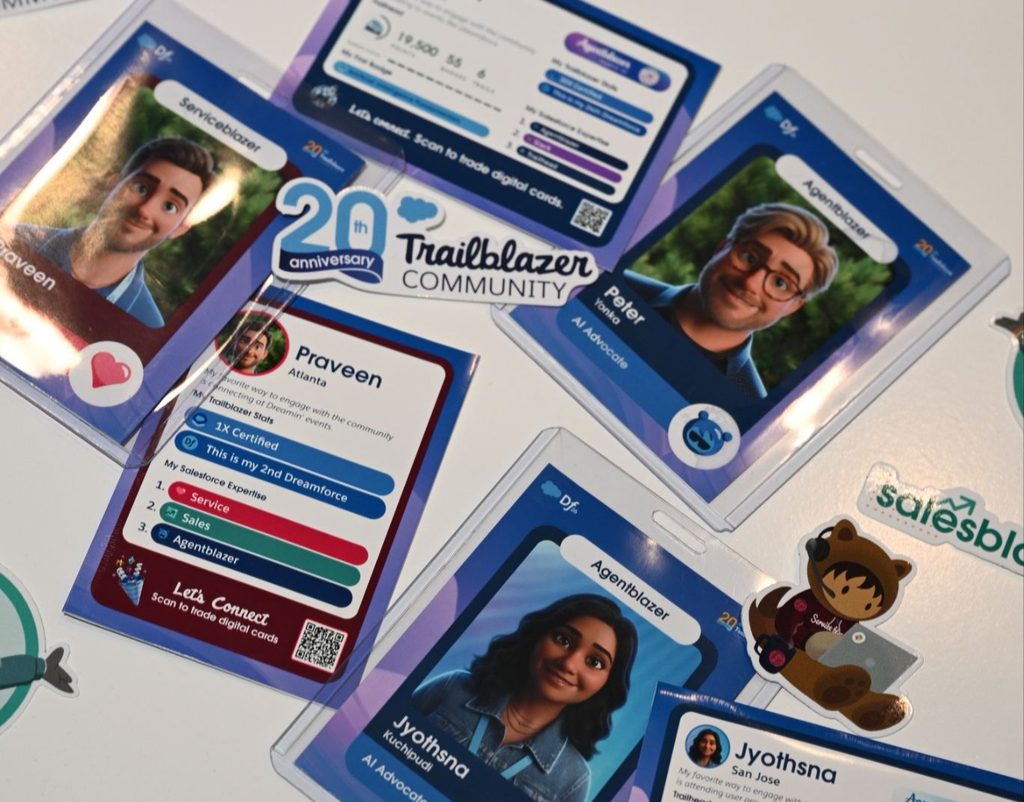
One badge scan did the heavy lifting. At the 2026 Dreamforce activation, both sides of the card told part of the attendee’s story. An AI portrait appeared on the front. On the back, classic trading card stats pulled directly from the attendee’s Trailhead profile the moment their badge was scanned.
George P. Johnson, Salesforce’s experiential agency partner, came to Pop Life Photo for a fresh take on an established experiential marketing activation. This time, the back of each card would feature Trailhead stats in place of the previous persona description.
Trailhead is Salesforce’s learning platform, connected to its Trailblazer community. Profiles can include points and badges that reflect each person’s learning achievements. Bringing those details onto the card gave attendees a way to carry a little of that story with them.
Making that happen required a custom software build. Pop Life Photo developed an integration that connected each badge scan to the attendee’s Trailhead profile, so every card carried real achievements without guests typing them in.
For planners considering AI trading cards for an event, the starting question is simple: which details would make a guest recognize themselves in the finished card? Here, the answer included the achievements they had built within the Salesforce community.
How Did Attendees Create Their Trading Cards?
The experience began with a badge scan, followed by a few questions and a photo at the same station. Once their card was ready, attendees received a digital copy by email and collected their physical copies at the printing station.
The badge scan pulled in each attendee’s Trailhead stats. The questions added more personal details, including where attendees lived, which Salesforce products they knew best, and how many Dreamforce events they had attended.
Then came the portrait. Each attendee’s photo was transformed into a custom AI character and placed within the branded trading card design.
Behind that guest experience was a custom software build and digital interface. The existing software could not bring in Trailhead profile information seamlessly, so the integration needed its own solution.
For planners, this is a useful detail to settle early. Some personal information can come from a few questions. Other details need to come from an existing system. Knowing which is which helps establish whether custom development belongs in the brief.
One Station For Questions And Photo Capture
Attendees could complete their questions and have their picture taken in the same place. Earlier versions asked them to finish the questionnaire before moving to a separate photo booth.
Bringing those steps together removed one transition from the guest journey. Attendees still headed to the printing station to collect their cards.
That whole journey deserves attention when planning an activation. Registration, questions, photography, digital delivery, and print pickup all shape the experience around the finished keepsake.
What Changed In The Card Design?
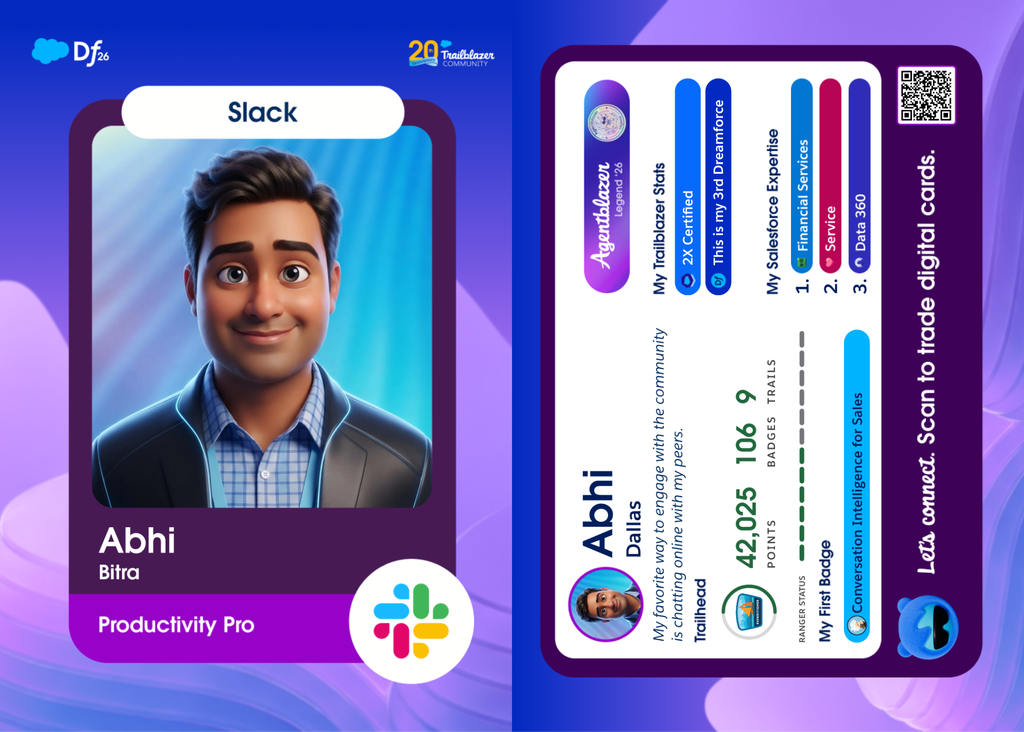
The redesigned cards gave attendees a dimensional animated-character portrait, with realistic textures and Salesforce-branded purple. On the back, a classic stats layout made room for their community achievements in place of the previous longer persona description.
The same purple ran through the physical activation, giving the cards a clear connection to the space where they were created.
Each side had its own role. The portrait put the attendee at the center of the design. The reverse added details about their achievements, interests, and experience.
For planners, reviewing a physical sample is an important part of getting those details right. At its final size, the card should have readable stats, a recognizable portrait, and a QR code that scans easily.
How Did The Cards Support Networking?
Each card included a QR code linking to the attendee’s personal microsite, where they could share contact details. Someone meeting them could see their portrait and stats, then use the code to stay in touch.
The concept grew out of Pop Life Photo’s Imprint experience, which debuted at the Experiential Marketing Summit. There, guests created trading cards on their own devices, each with a linked microsite for sharing their details. Dreamforce took that concept to a staffed, print-forward station built for conference scale.
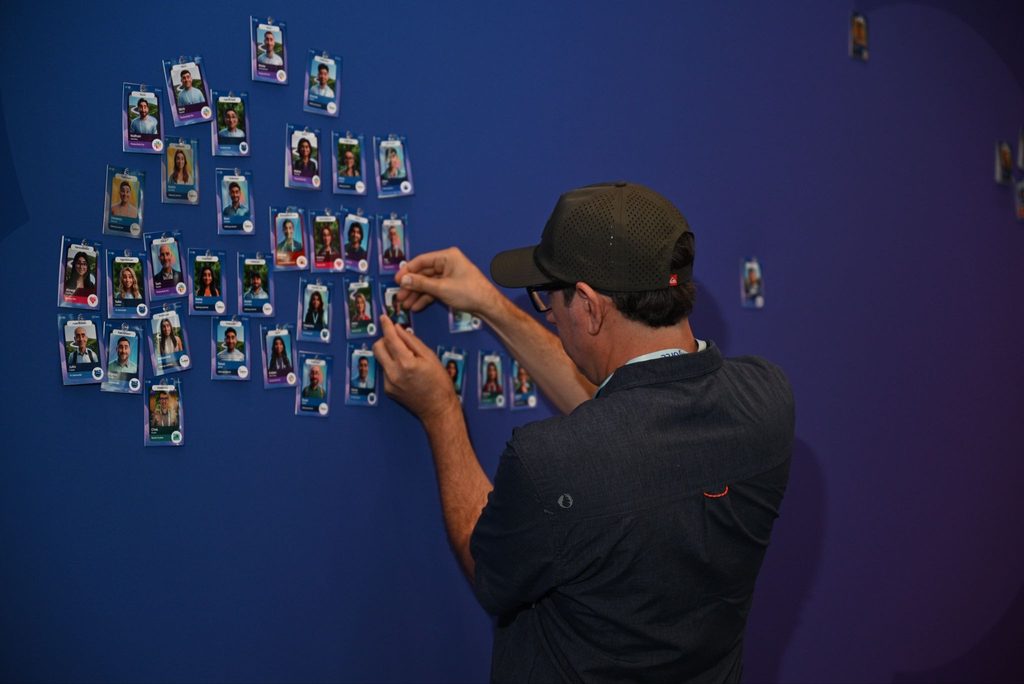
At Dreamforce, attendees received two standard prints. One came in a sleeve to wear on their lanyard. The other went on the Salesforce activation wall, alongside cards from fellow participants.
For trade show engagement, each version did its own job. The lanyard card made every attendee a walking introduction, and the wall gave the space a growing record of the community.
What Were The Gold Cards?
Every 50th participant received a special gold card, featuring a gold Salesforce mascot emoji and background. At pickup, those participants also received a hardcase version, bringing their total to three physical outputs.
The gold design added a special edition to the experience. Attendees did not need to complete an extra activity to qualify.
For planners considering something similar, the selection rule and pickup process need to work together. The print team needs a clear way to recognize the special card, prepare its presentation, and give each guest the right copies.
What Did The Activation Results Show?
Over the three days, the activation recorded participation, completed sessions, and cards sent by email. Each measure tells a different part of the story, so keeping them separate gives planners a clearer picture of the activity.
| Reported Measure | Total |
| Participants | 2,392 |
| Completed Sessions | 2,494 |
| Cards Sent By Email | 1,906 |
For events with a networking goal, those figures are a starting point. Understanding how many contacts were exchanged, or what happened after the event, requires a separate measurement plan.
A Personal Place In The Salesforce Community
For attendees, the experience made room for their own story within the wider event. Their portrait, Trailhead achievements, and Salesforce interests came together on a card that reflected their personal connection to the community.
One copy went with them, sleeved on their lanyard. Another joined the activation wall, placing their face alongside fellow attendees. The card could be a keepsake to take home and a small introduction to someone new, with details about what they knew and what interested them.
The QR code gave that introduction somewhere to go. Alongside the playful portrait and personal stats, it offered a practical way to share contact details and keep a conversation going.
A Card That Belongs At The Event
A thoughtful card experience starts with what guests might enjoy seeing, sharing, and keeping. This Dreamforce activation brought those choices together through personal achievements, a custom portrait, and a way to connect.
Pop Life Photo builds experiential activations around each event brief. For this activation, the team brought custom software, AI portrait design, and physical card production together, with the audience’s connection to Salesforce shaping the details.
Personalized AI trading cards are one of several AI branded photo experiences for events that we design around the audience in the room. Get in touch with us to discuss the experience you can create for the attendees at your next event.