


How One Team Ran Four Activations at Humane Society’s Annual FurBall in Silicon Valley
July 22, 2026
Most galas hire a different vendor for every experience. A photo booth from one company, a video activation from another, a step and repeat from a third. It works, but it means three sets of contacts, three load-in schedules, and three design styles competing on the same floor.
The Fur Ball 2026 took the opposite approach. Humane Society Silicon Valley brought in one partner to run the entire experiential side of the night.
The result was four activations that felt like one show. Here is how it came together, and why the one-team model matters more than most planners expect.
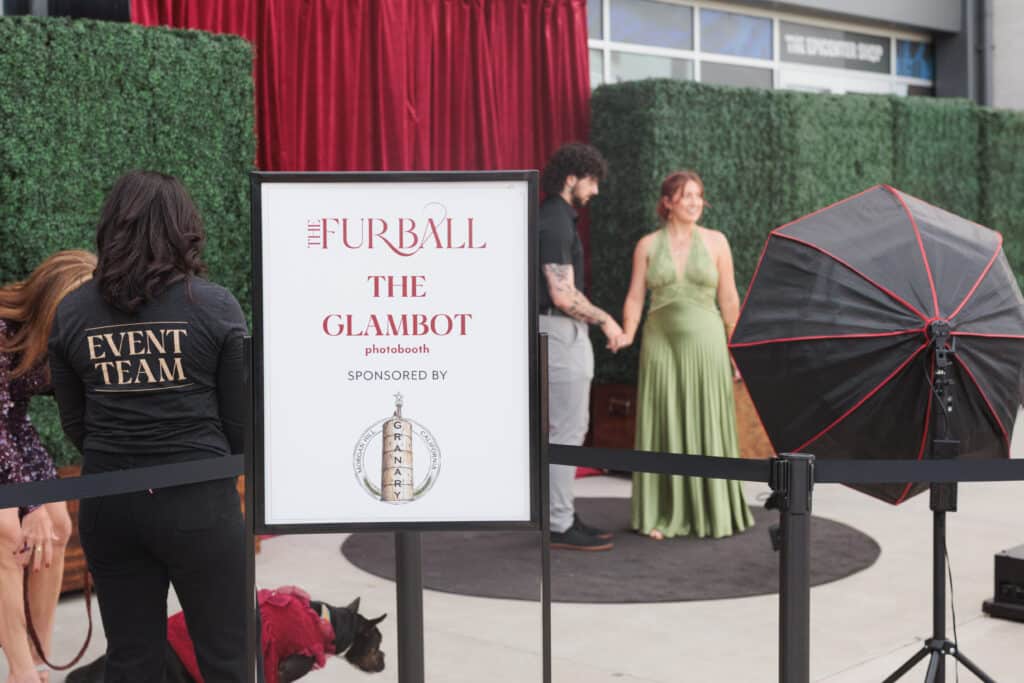
The Event
The FurBall is Humane Society Silicon Valley’s signature gala, an annual fundraising evening that celebrates the organization’s mission and the community behind it. It is a high-end night, and the guest experience has to match that.
For 2026, the team wanted the entertainment to feel intentional. Not a row of unrelated booths, but a set of moments that carried a single look and a single standard from the red carpet to the last photo of the night.
That is a harder brief than it sounds. The more experiences you add, the more places the quality can slip.
It is also the kind of brief that separates a partner from a vendor. A vendor delivers the booth you ordered. A partner thinks about how each moment connects to the next, and how the whole floor reads as one evening.
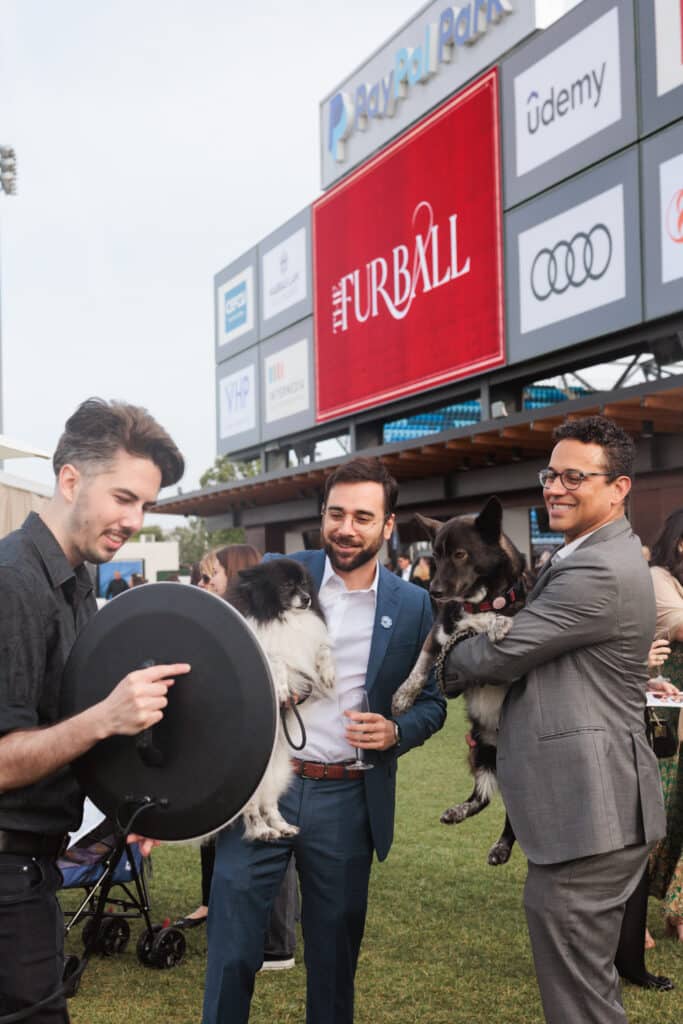
Four Activations, One Through-Line
Pop Life Photo delivered four distinct experiences at The FurBall, each chosen to give guests a different kind of moment while keeping the design language consistent.
The night opened with red-carpet step and repeat photography. Guests arrived to a branded backdrop and a photographer capturing arrival shots, the kind of images that set the tone for a premium evening and give the organization polished content to use afterward.
Inside, the Glambot X brought the slow-motion, cinematic hero moment. It is the activation guests line up for, and the one that produces the most shareable video of the night.
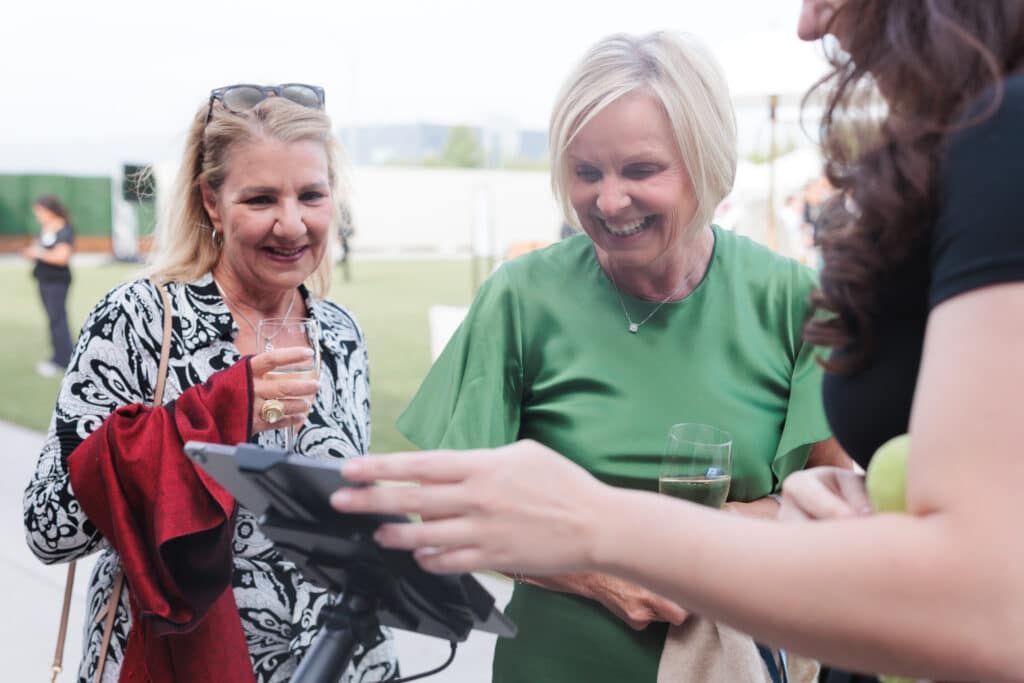
The Roaming AI experience moved through the crowd instead of asking the crowd to come to it. That mobility matters at a seated gala, where a fixed booth can be easy to miss once the program starts.
And because this was a Humane Society event, the puppy photo op stations were the emotional center. Built into classic photo booths, they gave guests a warm, on-brand moment with the animals at the heart of the mission.
Four experiences, four different feelings, one connected look across all of them.
Designed For A Fundraising Room
A gala is not just an event. For a nonprofit, it is a revenue night, and the guest experience is part of the ask.
When guests feel celebrated, they stay longer, they engage more, and they leave with a stronger connection to the cause. The activations at The FurBall were built with that in mind, giving guests reasons to move through the room and share the night rather than sit and wait for the program.
The puppy photo op stations did double duty here. They created a warm, personal moment for guests, and they kept the animals at the center of the story, which is exactly where a Humane Society event wants the attention to be.
Every photo and video also became an asset the organization can use afterward. Thank-you emails, social recaps, next year’s promotion, all of it starts with content captured on the night, already branded and ready to go.
The Numbers
Volume is not the point of a night like this, but it is a useful signal of how much guests engaged. Across the evening, the four activations produced:
- 351 step and repeat photos
- 185 puppy photo booth photos
- 53 Glambot X videos
- 51 roaming AI photos
Every one of those was captured, branded, and ready to share the moment it happened. For a fundraising event, that is content the organization can put to work long after the last guest leaves.
Why The One-Team Model Works
The reason to run four activations through a single partner is not just convenience. It changes the quality of the night in three specific ways.
One team, multiple experiences
When you hire a separate vendor for each activation, you are quietly taking on a coordination job. Different teams, different contacts, different people showing up at different times on event day.
With one partner, you have a single team running the entire show. That is fewer moving parts for the planner and tighter execution on the floor, because the same crew owns every experience.
A consistent brand experience
Design quality drifts when every activation comes from a different company. One vendor’s overlay looks nothing like another’s, and the photography style can vary just as much.
Under one partner, the branded outputs, the photography, and the on-screen design all carry the same look. The step and repeat, the Glambot video, and the puppy booth print feel like they belong to the same event, because they do. On a premium floor, that consistency is what separates a polished night from a patchwork one.
Centralized communication
More partners means more management. More email threads, more logistics calls, more versions of the same conversation about load-in and timing.
One partner means you confirm location, load-in, dates, and run-of-show once. The team you plan with is the team that arrives, which removes a whole category of event-day risk.
How Four Activations Stay Cohesive
Running four experiences as one show is a planning problem before it is a design problem. It starts with a single load-in that stages every activation together, so nothing competes for the same door or the same window of time.
From there, the design work is shared. The overlays, the print layouts, and the on-screen graphics are built from one brand direction, so a guest who visits the step and repeat and then the puppy booth sees the same visual language in both.
On the night itself, one team means the crew can flex. If the roaming AI experience draws a crowd early and the Glambot line is quiet, the same team reads the room and adjusts, because they are not protecting four separate contracts.
That coordination is invisible when it works. Guests just feel like the night flows, which is the point.
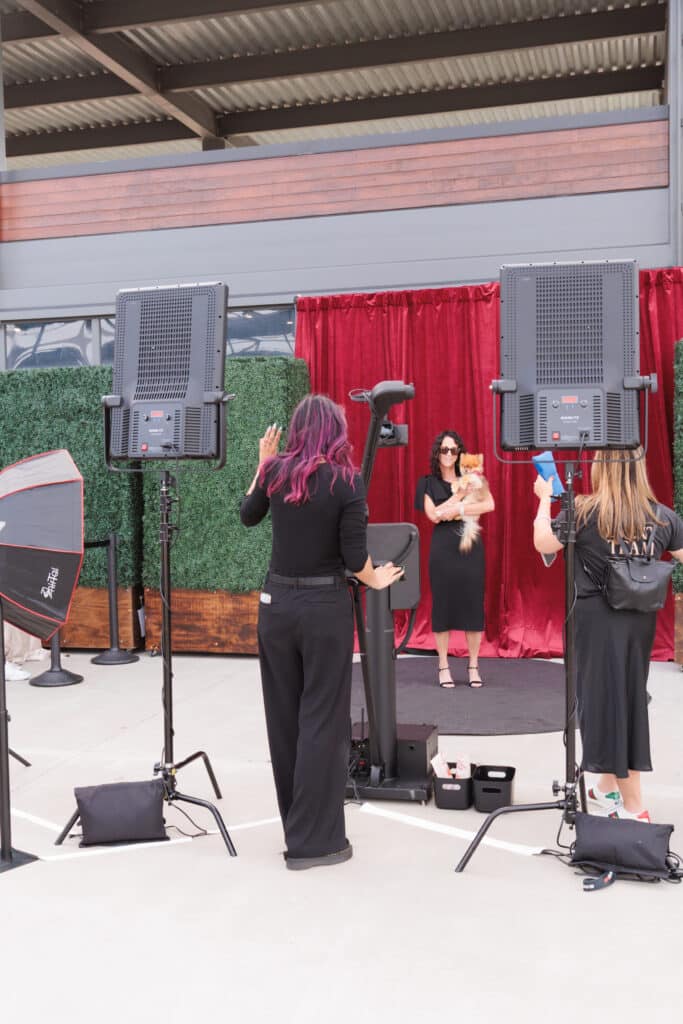
What This Means For Your Next Event
The FurBall is a strong example because it stacked four very different experiences into a single night and still felt cohesive. That is the payoff of the one-team model: you get range without giving up consistency.
For planners running galas, brand activations, or corporate events, the takeaway is simple. Adding experiences does not have to mean adding vendors, threads, and design risk. The right partner absorbs that complexity so the guest experience stays clean.
There is a cost angle too. Consolidating activations under one team usually means one load-in, one setup crew, and one planning cycle instead of several, which is easier to manage and easier to budget against.
And there is a quality angle that is harder to put a number on. When one team owns the whole floor, they carry the reputation of the entire night, not just their corner of it. That tends to raise the standard on every activation, because there is no one else to point to if a moment falls flat.
If you are weighing a multi-activation event, the question worth asking is not just what experiences you want, but how many teams you are willing to manage to get them.
Explore The Activations
Each of the experiences at The Fur Ball is available on its own or as part of a multi-activation package.
- Glambot X for the cinematic slow-motion hero moment
- Roaming AI Booth for a mobile experience that reaches every guest
- Photo Booths for classic, customizable photo moments
- Event Photography for full coverage of the night
You can see more of our work in our case studies, or start a conversation about your next event.
Planning a gala or corporate event with more than one activation? Let’s talk. One team can run the whole floor.